September's the time for stepping up & step them bears! Here we go!
1. Problems, problems everywhere...
Problem statements from Malaysia Cross Industry Virtual Hackathon 👀
Celcom: Telecommunications
1. For Oil & Gas client
How might we digitalise the communication process between employees in an off-shore oil rig and experts that are in the on-shore HQ to ensure that real-time information can be communicated accurately?
2. For Grocery client
How might we improve the supply chain process for the client to ensure that products delivered to customers are fresh & high quality especially when the orders are placed via an e-commerce platform?
3. For Agriculture client
How might we identify which plants are prone to bacterial & fungal infections and develop ways to prevent the diseases from spreading to other crops?
Malaysia Airlines: Travel
1. Health & Safety focused
How might we use technology to address the health & safety concerns of passengers during the travel journey?
2. Travel Experience focused
How might we utilise technology to enhance Malaysia Airlines service to deliver the warmth of Malaysian hospitality?
3. Sustainability focused
How might we engage & collaborate with our passengers to reduce waste on our flights?
Ecoworld: Real Estate
How might we develop a single platform to collect insights & feedback from various engagement channels to allow us to serve & manage customer experience?
HLX: Retail/Office space focused
How might we increase space utilisation of an office building in the city with low tenancy, especially in this era of changing work practices?
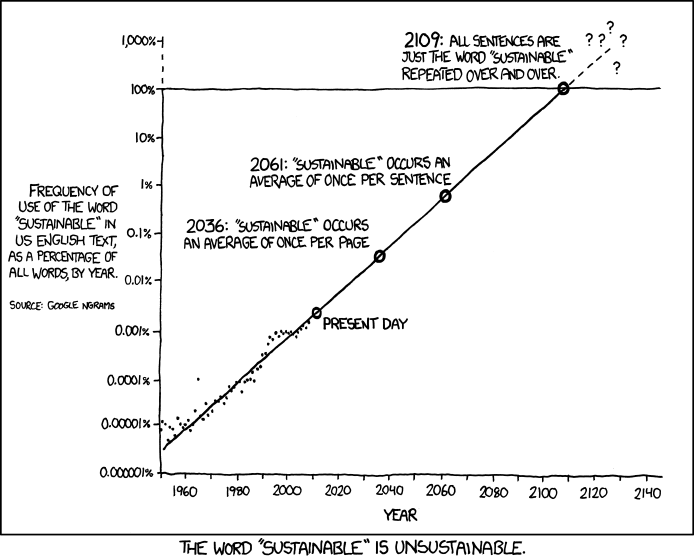
2. That's a heck of a linear regression 😲
3. You don't just study something & be an expert. You need to do it.
Entrepreneurship has
somehow become the “easy” option to fast-track their way to success, or
so they thought. Many are offering “instant” educational programs, both
informally through seminars and workshops or formally through university
degrees with the promise of making them entrepreneurs.
What educators often miss is that there is no research evidence that
suggests the possibility of “teaching” someone to become an
entrepreneur. You cannot call a subject “entrepreneurship”, and expect
that after taking a few classes studying and reading about it, someone
will be magically ready to become an entrepreneur.
This article was published in thejakartapost.com with the title "(Ugly) truth about entrepreneurship". Click to read: https://www.thejakartapost.com/academia/2019/12/05/ugly-truth-about-entrepreneurship.html.
Download The Jakarta Post app for easier and faster news access:
Android: http://bit.ly/tjp-android
iOS: http://bit.ly/tjp-io


Source: https://www.thejakartapost.com/academia/2019/12/05/ugly-truth-about-entrepreneurship.html
4. Hilarious

5. Laptop for deep learning. Woah, it's very humbling.

Store: https://lambdalabs.com/about?ref=blog
Blogs (Got great content): https://lambdalabs.com/blog/
6. Yeeaaa! Yeeaaa! Look who's in the news...

https://www.nst.com.my/lifestyle/bots/2020/09/623133/tech-two-utm-students-become-winners-asean-data-science-competition
7. Math for Machine Learning (from AWS Training)

8. Problem statements from Startup Weekend Singapore 2020: Tomorrow
25-27 September 2020 (Fri-Sun)


9. Maxis IOT Challenge 2020


10. Honest Bee offerings as modern shop

https://habitat.honestbee.sg/
11. Philly Codefest 2020 Theme: Environmental Sustainability


12. Estonia is like Europe's Singapore - digital country.
https://e-estonia.com/solutions/e-governance/i-voting/
Education & Research
13. Some new perspectives of linear algebra.
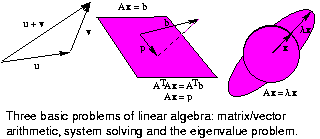
https://www.math.unl.edu/~tshores1/linalgtext.html
14. Inokyo (a cheaper alternative to Amazon Go shop automation)
https://techcrunch.com/2018/08/16/inokyo/
How Inokyo works:
1. Download its app and connect a payment method
2. Get a QR code that you wave in front of a little sensor as you stroll into the shop
3. Overhead cameras will scan your body shape and clothing without facial
recognition in order to track you as you move around the store. On-shelf cameras track when products are picked up or put back.
Combined, knowing who’s where and what’s grabbed lets it assign the items to your cart.
4. Scan again on your way out, and later you get a receipt detailing the charges. And if you’re overcharged, there’s an in-app support button for getting a refund.
Challenges:
- Originally, Inokyo actually didn’t make you scan on the way out, but it
got the feedback that customers were scared they were actually stealing.
The scan-out is more about peace of mind than engineering necessity.
- When a rush of customers floods in and cameras have to differentiate between multiple similar-looking people
- These stores will be judged by the convenience of the holistic experience, not just the tech.
- Human can check scanning, handle restocking, customer support and store maintenance once freed from cashier duties.
- The auto-shop race’s winner will be determined by who builds the most accurate
tracking software, easy-to-install hardware and pleasant overall
shopping flow.
Standard Cognition
Cameras only to see what people are picking up off the shelves and
eventually purchasing.
The end goal is for someone to walk in, grab an item off a shelf, and walk out without having to wait in line
to pay for it.
15. Omfg
Adesanya = Experience + Actual Learning + Precision + Expression + Self belief
Costa @the_shampion = Do what got you to the dance

Powwerrr + Learning from mistakes + Not repeating mistakes
16. Information overload & scattering > Miss out on full/targeted benefits > Recommender + Congregator + Updates + Links
17. Evernote & ClickUp have some good templates of documenting progress, goals, notes, tasks. Can look them to see how they think & organize these kinds of information.
18. Good video on logical, rational motivation on effort & goals.
19. Friggin dust
20. Corona to restore the "fear in God" among Klangites.
21. Doing experiments using oneself as the test subject
22. Bottom Up first, Top Down later or occasionally
Top down learning in simple terms
Carried by the winds of interest
Feynmann is spoken of here too. Invent something to understand it.
23. One of the most easily forgotten things in the world: No free lunch
24. Some nice recommendations from this blog series
25. How to study math?
Two kinds of understanding a math text:
- being
able to follow, reconstruct, etc. a proof or solution method
- rewiring one’s brain so that it’s obvious why the
theorem is true”
or why the solution works.
The second kind is the definite goal.
DONT'S
Don't memorise too much. Keep formulas in a cheatsheet.
Don't be afraid/discouraged to go back & relearn material.
DO
Divide & conquer. Break into smaller manageable blocks.
Skim for overview
Then reread with concentration
Taking notes on separate paper - help keep focus
Do (not read) each step of each example
Think about what you've read.
Fit it in with what
you already know.
- More general version of a specific case you
learned earlier?
- Shorter method for a previously
longer way?
- Does this use something you learned
previously that looked useless at the time?
Explain it in your own words without stumbling. No "sort of get it".
25. In many ways, you can approach math like sports:
Deal with cramps right away. When there’s something you
don’t understand, you may be tempted to just put it aside and hope for
the best. That strategy doesn’t work at all in math! Because
everything builds, if you don’t understand A you will probably not
understand B and C either.
If this happens in class, ask a question right away. Don’t
apologize and don’t worry about looking stupid; probably other people
have exactly the same question.
Warm up before the event. Before class, look back over
the readings and your homework. Make sure you are ready with any
questions.
Stay in training. Review your notes after
class, even rewrite them to make sure you understand everything.
If there are several days between classes,
review the material at least every other day to keep it fresh
in your mind.
Make sure you train enough. The College recommends 2–3 hours
per classroom hour, but you
may need more.
26. DC showing how to get out of an otherwise sticky ego war.
27. AI Blogs
28.
29.


30. https://www.zdnet.com/article/ai-aint-no-a-student-deepmind-flunks-high-school-math/
How does a country get money to build infrastructure? Like where does the money come from? If we knew, we can better allocate our time & energy to get it
Entrepreneurship has
somehow become the “easy” option to fast-track their way to success, or
so they thought. Many are offering “instant” educational programs, both
informally through seminars and workshops or formally through university
degrees with the promise of making them entrepreneurs.
What educators often miss is that there is no research evidence that
suggests the possibility of “teaching” someone to become an
entrepreneur. You cannot call a subject “entrepreneurship”, and expect
that after taking a few classes studying and reading about it, someone
will be magically ready to become an entrepreneur.
This article was published in thejakartapost.com with the title "(Ugly) truth about entrepreneurship". Click to read: https://www.thejakartapost.com/academia/2019/12/05/ugly-truth-about-entrepreneurship.html.
Download The Jakarta Post app for easier and faster news access:
Android: http://bit.ly/tjp-android
iOS: http://bit.ly/tjp-ios
How